
UK Casino Credit Card Payments: What the Rules Allow
 Available in GB
Content
The UK ban covers gambling deposits at licensed casinos; this guide explains payment alternatives, cashiers, withdrawals and why offshore access changes nothing.
Why UK-Licensed Casinos Don’t Take Credit Cards
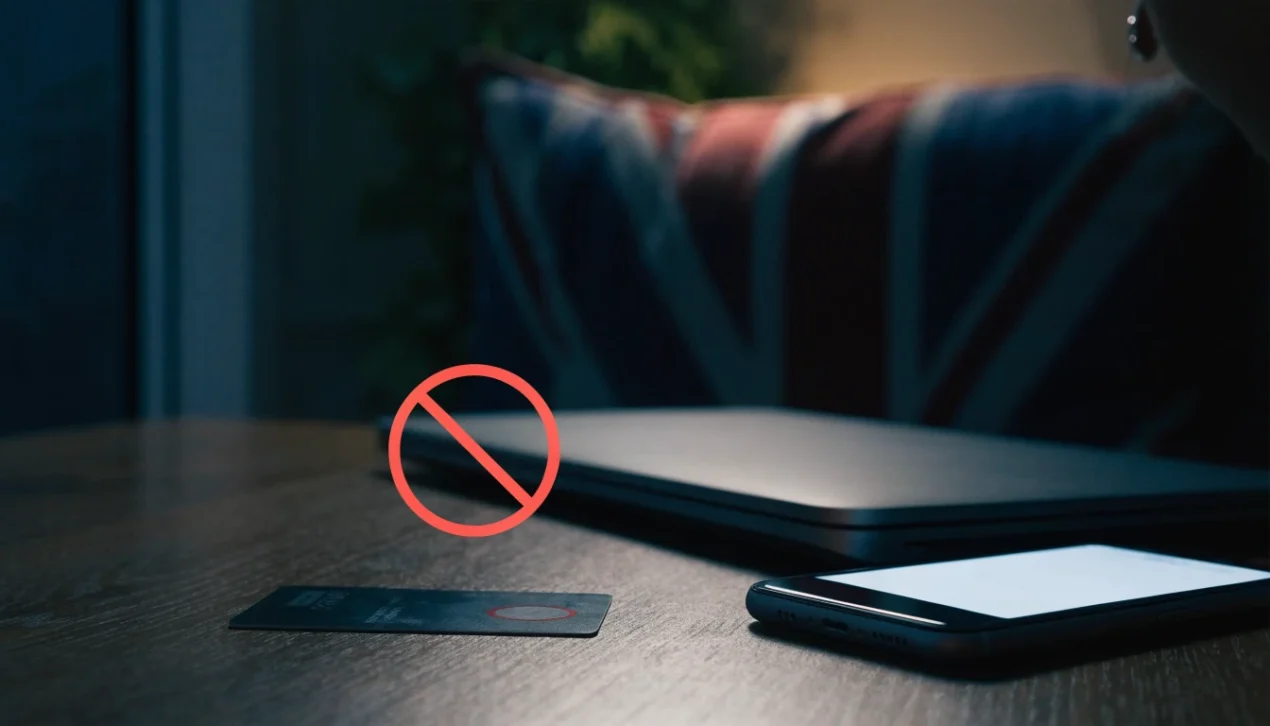
If you are trying to pay for online gambling with a credit card in the UK, the short answer is no: a UK-licensed casino cannot accept a credit-card payment for gambling. The restriction applies to deposits, not just to particular games. It is a regulatory rule, rather than a temporary decision by individual casinos or a limitation of a particular card issuer.
The UK Gambling Commission introduced the ban on 14 April 2020. It has not since been relaxed. So, whether you call it a credit-card casino or simply want to put money into an account using a credit card, the practical position at a UK-licensed casino is the same: the gambling payment cannot be made that way.
What the ban means
A credit card lets you borrow from the card provider and repay later. The restriction is intended to stop that borrowed credit being used to fund gambling. In practice, a remote gambling licensee serving customers in Great Britain must not accept credit-card payments for gambling. That includes an online casino deposit made with a credit card, whether you intend to play table games, casino games or slots.
If you’re looking at UK casino sites that accept credit cards in 2026, check the payment details and withdrawal terms before choosing where to play. This list gives you a concise reference point for considering your options.
1. Dieselwin
Payout speed: 1-3 business days
Dieselwin lists a payout speed of 1–3 business days. Check the site’s payment terms to see how this fits your needs.
2. EvoSpin
Payout speed: 1-3 business days
EvoSpin lists a payout speed of 1–3 business days. Review its payment terms before deciding whether it suits you.
3. SpinFormula
Payout speed: 1-3 business days
SpinFormula lists a payout speed of 1–3 business days. You can use that detail as a reference when reviewing its payment options.
4. BeOnBet
Payout speed: 1-3 business days
BeOnBet lists a payout speed of 1–3 business days. Check its terms for further information about payments.
5. Amunbet
Payout speed: 1-3 business days
Amunbet lists a payout speed of 1–3 business days. Review the site’s payment terms to understand the conditions that apply.
6. Jetsetspins
Payout speed: 1-3 business days
Jetsetspins lists a payout speed of 1–3 business days. Check its terms before you make a decision.
7. Chanze
Payout speed: 1-3 business days
Chanze lists a payout speed of 1–3 business days. Its stated payout speed is a useful detail to consider alongside the payment terms.
8. x3bet
Payout speed: 1-3 business days
x3bet lists a payout speed of 1–3 business days. Review its payment terms for any additional details you need.
9. SlotoSport
Payout speed: 1-3 business days
SlotoSport lists a payout speed of 1–3 business days. Check the site’s terms to learn more about its payment conditions.
10. NightLuck
Payout speed: 1-3 business days
NightLuck lists a payout speed of 1–3 business days. Consider this detail when reviewing its payment terms.
This is not a rule that applies only when a player asks to borrow money from the casino. The relevant issue is the payment source: if the payment is a credit-card payment for gambling, the operator cannot accept it. Nor does the rule depend on whether the amount is small, whether you expect to repay the card bill promptly, or whether you have funds available elsewhere. Those details do not turn a prohibited credit-card gambling payment into an accepted one.
The restriction also covers indirect routes. A credit-card payment does not become acceptable for gambling simply because it passes through a money service business first. Remote operators cannot accept a credit-card-funded payment for gambling through that kind of intermediary. The rule also prevents an operator from accepting a wallet payment where the wallet allows credit-card funds to be used for gambling. Changing the route does not change the source of the funds.
That distinction matters because a cashier may display several ways to pay, and a payment service may handle funds in more than one way. The ban is not avoided by moving money between services if the underlying payment is credit-card funding that can be used for gambling. The restriction is on accepting credit-card payments for gambling, not merely on displaying a particular card logo at checkout.
UK casino sites that accept Jeton: payment guide · Casinos That Accept Ripple XRP in the UK: How to Check
When the rule took effect
The credit-card gambling ban took effect on 14 April 2020. It remains in force. A casino’s older payment page, a cached description, or a general statement that it accepts a particular card brand is not evidence that credit-card deposits are permitted for UK gambling.
The date is also useful when assessing claims that the restriction was temporary or has since been withdrawn. It has not been relaxed. A UK-licensed casino cannot decide to make an exception for a customer who asks, and a customer cannot opt out of the rule by agreeing to the risks. The operator is responsible for complying with the requirements that apply to its licence.
Does the rule cover online gambling?
Yes. The ban applies to credit-card payments for online gambling at UK-licensed sites. Remote gambling licensees offering gambling to customers in Great Britain must hold the relevant Gambling Commission licence, and they cannot accept credit-card payments for gambling. That includes a deposit into an online casino account before you choose a game. It is not limited to the moment when a bet is placed.
The gambling account may allow you to play different kinds of games, but that does not change the payment rule. A credit-card deposit cannot be accepted simply because the money is intended for one game rather than another. If the payment funds gambling, the restriction applies. This includes online slots: using a credit card to fund an account for slot play is still a credit-card payment for gambling.
Credit Card Ban
UK-licensed casinos are prohibited from accepting credit card payments for gambling, including deposits for online slots.
The same principle applies if you are playing on a phone, tablet or computer. The device does not affect the rule. Nor does the fact that the casino is operated by a company based outside the UK. Remote operators selling into the British market must hold a UK Gambling Commission licence, regardless of where they are located, and the restriction applies to the licensed gambling service.
A site’s wording can sometimes make the payment position seem less clear than it is. A general reference to cards, or a list of card brands, does not establish that credit cards can be used for gambling in the UK. The relevant question is whether the payment is a credit-card payment and whether it is being accepted to fund gambling. At a UK-licensed casino, it cannot be.
Why a card-funded wallet is not a workaround
The rule is designed to cover more than a direct payment from a credit card to a casino. If an operator could accept credit-card money whenever it was routed through another service, the restriction would be easy to bypass. For that reason, remote operators must not accept credit-card payments for gambling through a money service business. They also cannot accept a wallet payment where the wallet permits credit-card funds to be used for gambling.
This does not mean that every payment service works in the same way or that every wallet is automatically barred. The relevant point is narrower: credit-card funds cannot be used through a wallet to make a gambling payment accepted by a UK-licensed operator. A different label on the transaction does not make credit funding lawful for that purpose.
UK Casino Sites That Accept EcoPayz or Payz · Casinos That Accept Bitcoin in the UK: What to Check
If a payment is rejected, trying a different route that still relies on the credit card does not resolve the issue. It may instead create confusion about where the funds came from. The rule is about the source and use of the payment, not a technical obstacle that a customer can overcome by changing the checkout sequence.
What about a casino outside the UK licensing system?
The ban described here governs operators that must comply with UK Gambling Commission requirements when serving the British market. An offshore site that does not hold a UKGC licence sits outside that regulatory system; its willingness to display a credit-card option does not make it a UK-licensed casino or change the rule for UK-licensed operators.
For a customer, a payment option shown on a site is not proof that the site is authorised to offer gambling in the UK. The legal framework requires remote gambling operators selling into the British market to hold the appropriate licence. The presence of a credit-card button cannot substitute for that licence, and it does not establish that the payment is protected by the UK regulatory framework.
The distinction is important because a site may describe itself as available to UK players while operating outside the UKGC system. That does not make it subject to the same oversight as a licensed operator. For the question of credit-card gambling at a UK-licensed casino, however, the answer remains straightforward: the operator cannot accept the payment.
Why your personal circumstances do not create an exception
You might have a credit limit that you can afford to repay, or you might plan to clear the balance immediately. Neither circumstance creates an exception to the ban. The restriction is not a personal affordability assessment carried out at the cashier. It is a rule governing what the operator may accept as a gambling payment.
The credit-card ban is a regulatory requirement for the operator and cannot be bypassed by player consent or personal affordability.
A player also cannot make the operator’s acceptance permissible by giving consent or confirming that the card is theirs. The operator has to follow the payment restriction regardless of a customer’s intention to repay. This is why a request to process a credit-card deposit manually should not change the outcome.
The policy addresses a particular risk: gambling with borrowed money. Credit can make spending feel separated from the funds available in a bank account, while the repayment obligation remains. The rule removes credit cards as a permitted funding route for gambling at UK-licensed operators rather than asking each player to decide whether borrowing is manageable.
That explanation should not be mistaken for a promise that the ban removes all financial risk from gambling. It does not. The restriction concerns one means of payment. It does not mean that every other form of spending is affordable, or that a player cannot lose money using another permitted route. The legal boundary is clear, but personal budgeting remains a separate matter.
The practical answer
You cannot use a credit card to deposit at a UK-licensed online casino, to fund online gambling through a credit-card-funded wallet, or to pay for slot play through a credit-card deposit. The rule began on 14 April 2020 and remains in force. It applies to the gambling payment, including when the payment is routed through an intermediary.
Casinos That Accept Wirecard in the UK: What to Check · Casinos That Accept Revolut in the UK: What to Check
If a site appears to offer credit-card gambling to UK customers, do not treat the button or a payment description as proof that the transaction is allowed at a UK-licensed casino. The operator’s licensing status and the actual source of funds matter. A licensed operator cannot accept a credit-card payment for gambling, even if the card issuer would approve the transaction or the player expects to repay it without difficulty.
What “Credit Card Casino” Means in the UK
The phrase “credit card casino” can sound like a straightforward description of a payment option: a casino where you enter card details and fund your account using borrowed money. In the UK, that is not what a legal, UK-licensed casino can offer for gambling. The phrase is better understood as a broad label used for searches and discussions about casino payments, not as proof that a particular site accepts credit-card deposits from UK customers.
The distinction matters because a card network’s name does not tell you which kind of card is eligible. Visa and Mastercard, for instance, are brands associated with card payments, but a listing of either brand does not establish that a credit card can be used for gambling. The relevant detail is the card product and the payment rules that apply to the customer and transaction.
A specialist casino review may list Visa and Mastercard among a site’s payment methods. Treat that as an indication of what the review reports, not as confirmation that a credit card will work for a UK gambling deposit. Current UK availability and card-product eligibility need to be checked in the casino cashier. The cashier is where an operator shows the payment options it makes available for the account in question; a general payment-logo list may not give you the same information.
Attention: A card network logo (like Visa or Mastercard) on a site is not proof that credit cards are accepted for gambling in the UK.
A card brand is not a card type
A payment-method page can name a network without making clear whether it means debit cards, credit cards or both. That leaves room for a misleading impression: a reader sees a familiar card brand and assumes that any card bearing its logo can be used. The logo alone does not settle the question.
In particular, a debit card and a credit card are not interchangeable just because they share a network brand. A debit card draws on money in an account; a credit card uses a credit facility. For a UK customer, seeing a card brand listed should not be read as permission to fund gambling with credit. Check the cashier’s description and the eligibility rules for the particular card you intend to use.
This also explains why a page describing “casino sites that accept credit cards” can appear to contradict the UK position. It may be using “card” loosely, listing a brand that also issues debit cards, or describing payment options without clarifying what UK customers can actually use. The wording is not enough to resolve the practical question.
What a payment listing can and cannot tell you
A site’s payment information can be useful, but its level of detail varies. A logo may show that a payment provider or card network is supported in some context. It does not, by itself, confirm that the method is available to every customer, that a credit product is eligible, or that the option is currently enabled for a UK account.
Casinos That Accept Citadel in the UK: Payment Checks
That is why the cashier deserves more weight than a short list of logos. Check the payment option while signed in to the relevant account, read any conditions shown there, and distinguish the card type from the brand. If the information does not identify the eligible product clearly, do not assume that a credit card is accepted simply because the network appears on a payment page.
The word “accepted” can also conceal different stages of a transaction. A method might be named in general information while a particular card is declined or unavailable when you try to use it. The presence of a logo is therefore not a promise that a deposit will be authorised. Nor does it establish that the operator can lawfully accept the transaction for gambling.
Make the question more precise
If you are trying to find out whether a casino will take a particular card, the useful question is not merely whether it lists Visa or Mastercard. It is whether the UK-facing cashier accepts your specific card product for a gambling deposit. That phrasing separates the card network from the source of funds and avoids treating a general brand reference as an answer.
It also prevents two different meanings from being mixed together. Someone may use “credit card casino” to mean a casino payment page that mentions a card brand. Someone else may mean a site that permits a deposit funded by credit. Those are not equivalent descriptions in the UK. A legal casino may display a card network while allowing eligible debit-card payments, without thereby accepting credit-card payments for gambling.
Do
- Check the cashier while signed in
- Distinguish card product from card brand
- Read specific eligibility rules
Don’t
- Assume a brand logo means credit is okay
- Rely on general “card-friendly” labels
- Infer eligibility from a payment listing
The same caution applies to descriptions that call a site “card-friendly” or say that it supports card payments. Such wording may be accurate in a broad sense but still leave the key point unanswered. Look for a clear description of the payment product available to UK customers, then confirm it in the cashier rather than inferring eligibility from a label.
For a UK player, then, “credit card casino” is not a reliable category of legal casino. It is an imprecise way of referring to card-related payment information, and it can blur the difference between a card network and a credit product. Use the cashier to establish what is currently available, and do not treat a brand logo or a general payment listing as evidence that a credit card can fund gambling.
How to Compare Casino Payment Options Instead
A useful comparison is not a league table of UK casinos accepting credit cards: a UK-licensed casino cannot accept credit-card payments for gambling. Instead, compare the legal payment options available to you and what each route may cost. A method that appears free at the cashier can still involve charges elsewhere in the transaction.
Start with the casino’s payment terms, then check the terms of the provider and the bank or card issuer involved. Possible costs include a charge from the casino, a payment-provider fee, an issuer or bank fee, currency conversion and network costs. Which of these applies depends on the route and the transaction. A zero-fee label from one party does not establish that the whole payment is cost-free.
Casinos That Accept Upaycard in the UK
Currency deserves particular attention. If your account or payment is not handled in pounds sterling, compare the exchange rate used with the rate you would expect, as well as any stated conversion charge. The difference between those rates is the exchange-rate spread. A specialist payment review notes that this spread can cost more than a visible flat fee. That is why comparing only the fee shown beside a method can give a misleading result.
There is no single payment method that is always the cheapest. The answer depends on the amount you intend to move and the specific charges applied by the casino, payment provider, bank and payment network. A fixed charge may matter more on a smaller transaction; a conversion spread may matter more when currency is exchanged. These are comparisons to make using the terms for your actual payment, not assumptions based on a method’s name.
A practical check is to look for four things before confirming a payment: whether the casino charges for it, whether the provider or bank may charge, what currency will be used, and whether conversion or network costs apply. If a fee is described as variable, check whether the final amount will be shown before you approve the transaction. Keep the stated currency and the amount you expect to reach the casino in view; otherwise, a quoted fee may not tell you what the transaction will cost overall.
Check Payment Costs
- Check if the casino charges a fee
- Verify potential provider or bank fees
- Confirm the currency being used
- Check for conversion or network costs
Do not treat the cashier’s list of payment logos as a price comparison. It indicates what the casino says it supports, not whether your own provider will apply a fee or which exchange rate will be used. Terms can differ by payment route and account, so check the current details at the point of payment.
The best option for your circumstances is therefore the one whose full cost you can establish and accept, not necessarily the one with the lowest advertised fee. If the casino, provider or bank does not make a relevant charge or conversion rate clear, factor that uncertainty into your choice rather than assuming the transaction is free.
Deposits, Withdrawals and the Route Your Money Takes
A payment method appearing in a casino’s deposit menu does not tell you how withdrawals work. Before using one, check both directions: whether it can fund your account and whether the casino can pay winnings back through it. The two processes may have different conditions, and a convenient deposit route can still leave you needing another way to receive a payout.
A common arrangement is to return funds to the original payment source. UK anti-money laundering rules generally require this, and returning money to the route it came from is also an anti-fraud control. This is often described as a closed-loop approach: the deposit and withdrawal follow the same route where possible.
Direct banking at UK casinos: payment options explained
That can matter if you deposit from one account but ask for a payout to a different card, bank account or payment service. An alternative route may be considered, but the casino can ask for additional verification before using it. You may need to establish that the destination belongs to you and explain why the original route cannot be used. Using an account in your own name consistently for deposits and withdrawals can reduce avoidable questions about ownership.
The payment provider’s name alone is not enough to establish that a particular route will work. Check the cashier’s withdrawal instructions, the account terms and any limits or exclusions shown for your own account. If the site offers more than one withdrawal route, look for whether each is available after your chosen deposit method. Do not assume that a method shown for adding funds is also available for receiving them.
Timing is another reason to consider both sides before depositing. A deposit may be credited quickly, while a payout follows a separate process. A specialist casino review describes card deposits as potentially instant but says payouts can take several business days; that is an illustration, not a timetable to rely on for a particular casino. The operator’s own stated processing times and your account status are more relevant.
Withdrawal time includes the casino’s internal approval, not just the time taken by a bank or payment provider to deliver the money. A specialist review notes that a first withdrawal can take longer while verification is completed. If identity or payment ownership checks remain outstanding, the request may not proceed until the casino has what it needs. Completing KYC before requesting a payout may help avoid a preventable hold, although it does not remove the operator’s approval process.
Understanding Withdrawal Timing
Withdrawal time consists of the casino’s internal approval process and the provider’s delivery stage. A first withdrawal may take longer due to identity or payment ownership checks (KYC).
When comparing routes, distinguish the casino’s processing stage from the provider’s delivery stage. A status such as “approved” does not necessarily mean the funds have reached your account. Bank transfers, for instance, can be affected by cut-off times, weekends and currency conversion, while the casino may first need to review the withdrawal. Check which stage the quoted timing covers and whether the casino gives separate estimates for approval and delivery.
Keep the details consistent: use payment accounts registered to you, confirm the account name and currency, and save the transaction confirmation. If the casino cannot return funds through the original source, ask what alternative it will accept and what documents it requires before relying on that route. The cleanest arrangement is often one named account used for both funding and payout, with the cashier’s rules checked before the first transaction.
Payment Methods You Can Check in the Cashier
A UK-licensed casino’s cashier can show several ways to pay without a credit card, but availability is set by the individual operator. Treat the cashier as the current check: a method mentioned on a general payments page may not be available for your account, and a deposit option does not automatically provide a matching withdrawal route.
Skol Casino Payment Options: UK Banking and Deposit Methods
Debit cardsare a familiar option. UK casinos commonly accept debit cards, including Visa and Mastercard, but the names of the card networks do not guarantee that every card product or transaction will be accepted. Check the cashier and any card-specific conditions before trying to pay.
Bank transfers and open banking are separate routes worth checking. Open banking lets you approve a payment through your bank, while a bank transfer moves funds between bank accounts. A specialist casino review describes open banking and transfers as capable of supporting instant deposits and fast withdrawals at many sites; that is not a promise about every casino or account. Check the operator’s stated processing details, and confirm whether the route is available for both deposits and withdrawals.
E-wallets include services such as Skrill and Neteller. They are available at some casinos, but a specialist casino review reports that they are often excluded from promotions. Read the terms for the particular offer before depositing: using an e-wallet may affect eligibility even when the cashier accepts it. Also check whether the wallet is available for withdrawals, rather than assuming that deposit support covers both directions.
Prepaid vouchers can suit someone who wants to pay using a voucher rather than a bank card. Paysafecard is deposit-only, so do not treat it as a way to receive winnings. You would need to check the casino’s withdrawal arrangements separately.
Before choosing, look at the payment method’s conditions alongside the promotion terms. A method may be available but excluded from a bonus, or may accept deposits without supporting payouts. The practical details can vary between operators and can change, so confirm them in the cashier before you make a transaction.
Why a Non-GamStop Site Doesn’t Make Credit-Card Gambling Legal
GamStop is a self-exclusion scheme. A casino’s relationship with it concerns whether a person who has self-excluded can access that casino; it does not determine which payment methods the casino may accept. A site being outside GamStop is not permission to use a credit card for gambling.
GamStop and Payments
GamStop status does not create an exception to the UKGC ban on credit-card gambling.
The UK regulator’s credit-card gambling ban took effect on 14 April 2020 and has not been relaxed. It applies to gambling payments, not just to casinos that participate in a particular self-exclusion scheme. Remote gambling operators serving customers in Great Britain must hold a UK Gambling Commission licence, and that licence does not let them accept credit-card payments for gambling. Routing credit-card funds through a money service business does not make the payment acceptable either.
This is why a site described as a non-GamStop casino that accepts credit cards needs careful scrutiny. The description may refer to a site outside the UK regulatory system, rather than a UK-licensed casino with an exception to the rule. Offshore casinos do not hold a UKGC licence. Their accessibility to UK residents does not turn them into licensed operators or change the UK payment restriction.
A site’s absence from GamStop is not proof of its licence status. Nor is a credit-card option displayed on a website proof that the payment is permitted for gambling by a UK-licensed operator. If you are considering a casino serving British customers, check its current licence on the UKGC public register before depositing. If it has no UKGC licence, it is not a legal online casino for UK players, even if its website is accessible.
Self-exclusion and payment rules address different risks. Self-exclusion is a way to restrict access to gambling; the credit-card ban restricts how gambling can be funded. Neither substitutes for the other. If you have chosen to self-exclude, seeking a site outside that scheme may undermine the protection you put in place. And if a site presents credit-card gambling as a benefit of being outside GamStop, that claim is not evidence that the payment is lawful for a UK-licensed casino.
The practical distinction is simple: GamStop status does not create a credit-card exception. A UKGC-licensed casino cannot accept credit-card payments for gambling, whether or not it is part of GamStop.
Casinos That Accept Click2Pay in the UK
Playing Online Slots Without a Credit Card
You cannot use a credit card to fund online slot play at a UK-licensed casino. The restriction applies to the gambling deposit, not just to a particular game or type of bet. Putting the money towards slots rather than another casino game does not change how the payment is treated.
The ban took effect on 14 April 2020 and remains in force. So a UK-licensed casino cannot accept a credit-card payment for a slot deposit. Nor does routing credit-card funds through a payment service make the deposit acceptable: the restriction covers credit-card payments for gambling through a money service business, and operators cannot accept wallet payments where the wallet allows credit-card funds to be used for gambling.
This matters if you are comparing ways to play. A site’s slot catalogue and its cashier are separate questions: being able to open a slot game does not mean every way of funding an account is permitted. A credit card is not a lawful funding route for online slots at a UK-licensed casino, even if the card appears to work for other purchases.
Casinos That Accept E-Checks in the UK: What to Check
Be wary of claims that a particular type of slot, account or payment route makes credit-card gambling possible. The relevant point is whether credit-card funds are being used for a gambling deposit. A different label or an extra step in the payment chain does not remove the restriction.
If you already have a casino account, check the payment options shown in its cashier rather than assuming a card accepted elsewhere will be accepted for gambling. The same applies when you are looking at a new account: confirm the available method before trying to deposit. This is a practical check, not a way around the ban.
In short, you can play online slots without a credit card, but you cannot use a credit card to make the gambling deposit at a UK-licensed site. That remains true whether you call it a slot deposit or simply money for casino play.
Why must withdrawals return to the deposit method?
Returning funds to the original payment source is a common anti-fraud and anti-money-laundering control. Using a different route may mean extra verification.
What is the fastest withdrawal method for UK casinos?
PayPal, open banking services and debit cards linked to fast payout systems are generally among the quickest. The casino’s approval process and your verification status also affect how soon you receive the money.
Which method has the lowest fees?
There is no universally cheapest method. Compare the casino’s charges, provider or bank fees, currency conversion spread and any network costs for your transaction.
Is Skrill available?
Yes, Skrill is available at some UK-friendly casino sites. It is often excluded from promotions.
Do UK casino withdrawals require verification?
Yes, casinos may require verification before paying out, and first withdrawals can take longer while checks are completed. Keeping your account details and payment method in your own name can help avoid basic ownership issues.
Why can a fast payout casino still delay my withdrawal?
A casino must approve the withdrawal internally, and that process can take longer if your account is not fully verified. First withdrawals may also be delayed while verification is completed.
Are fast casino withdrawals guaranteed?
No. The timing depends on the casino’s approval process, your verification status and, for bank transfers, factors such as cut-off times and weekends.
Related posts

Top Rated Online Casinos UK: Ratings and Terms

Best Wazdan Online Casinos in the UK: What to Check